
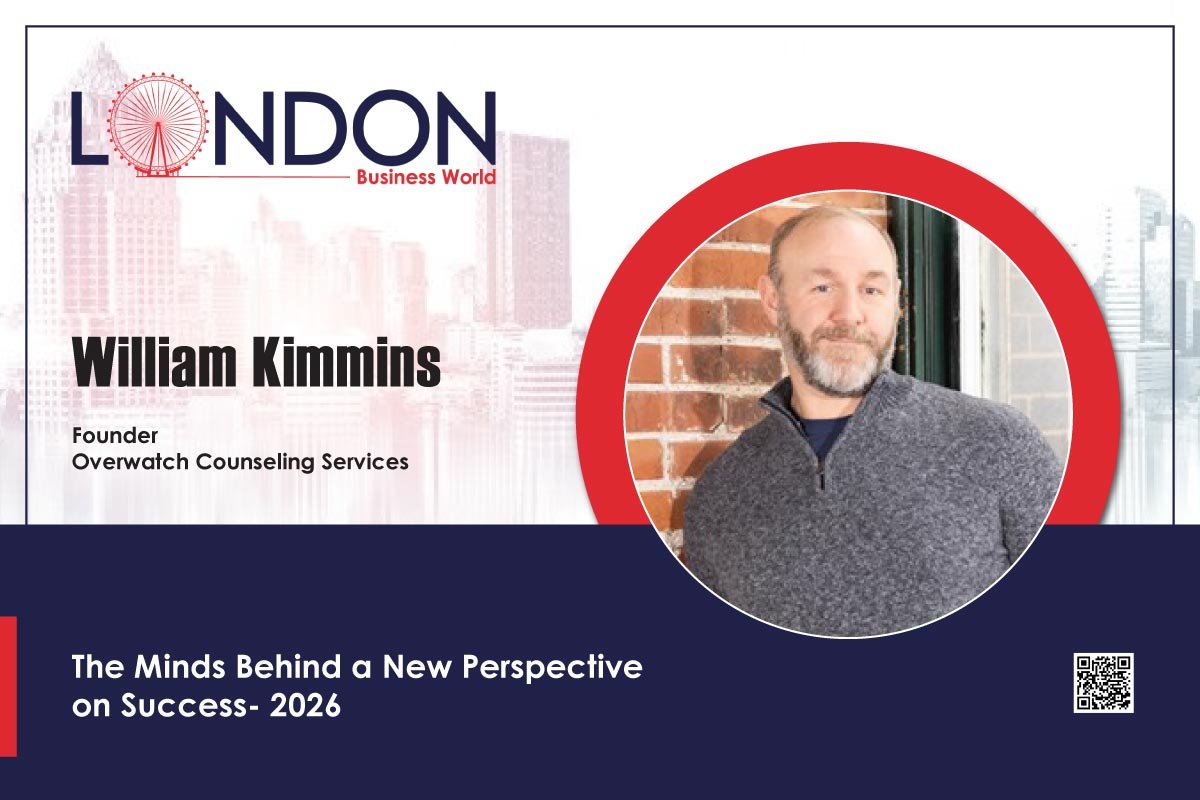
Some leaders have an authority that never needs to be announced. It comes from years of discipline and service, from carrying responsibility where each choice has consequences, the pressure never lets up, and other people’s well-being rests on sound judgment. The most admirable leaders are not remembered only for what they accomplished. They are remembered for staying steady while guiding others through the unknown. To them, resilience means more than simply enduring. It means keeping a clear head, staying flexible, and holding on to purpose while bearing the load of leading.
William Kimmins’ career is a living example of that belief. He spent more than twenty years as a United States Army officer, serving in leadership roles with the Mission Command Training Program and in operational assignments at several installations. Through it all he developed a style of leadership grounded in discipline and service.
As Founder of Overwatch Counseling Services, he now offers that same composure to high-performing professionals. His journey from operational command and advisory work into clinical mental health practice combines experience, insight, and resilience in an unusual way, and it has made him a practitioner devoted to helping others lead with clarity, stability, and purpose.
A Calm, Direct Style
William Kimmins calls his own style direct, calm, and grounded. A handful of principles anchor it: encouraging personal agency over a victim mindset, preferring clarity to avoidance, pairing discipline with compassion, and communicating honestly while showing respect.
Several evidence-based clinical approaches inform his work at Overwatch Counseling Services, among them Acceptance and Commitment Therapy, Cognitive Behavioral Therapy, Dialectical Behavior Therapy, trauma-informed care, and strength-based methods. He values these frameworks for the direction they offer, yet he regards them as instruments, not the point of the work.
What matters most to him is helping people regain their sense of agency, so that they choose their responses on purpose instead of reacting automatically under stress. In his view, lasting high performance does not come from pushing emotions down. It comes from weaving together awareness, discipline, and self-regulation.
The Lesson That Reshaped His Leadership
One of the most valuable lessons in William Kimmins’ leadership came when he recognized that strength without reflection can harden into rigidity, and that rigidity tends to turn into fragility, leaving little capacity to adjust when conditions shift.
Early on, he thought of resilience mostly as endurance: pressing forward and refusing to stop. Experience taught him that leadership which lasts depends on toughness, but also on flexibility, emotional awareness, and the courage to face one’s own blind spots. That realization marked a turning point in his growth. He came to see that leadership rests not on control alone but on influence, self-regulation, and the example a leader sets. Managing your own reactions is vital, since guiding other people well becomes much harder without that steadiness.
Why Overwatch Began
Overwatch Counseling Services grew out of lived experience, not theory. William Kimmins served more than twenty years in the United States Army, a large share of it within U.S. Army Special Operations. Those years showed him directly what high performance demands of leaders working in intense, high-stakes settings.
He stood beside people who made life-or-death decisions under pressure and steered teams through chaos and uncertainty. He also noticed a hidden cost. When the mission was over, the nervous system frequently stayed switched on. Many high-performing leaders were left with lingering stress, emotional distance, identity struggles during transitions, and strained relationships at home, all under the weight of unrelenting responsibility.
Overwatch Counseling Services was built to support those people. It operates as a clinical mental health practice, but its work overlaps naturally with leadership development, because so many of its clients are high-performing professionals such as military leaders, first responders, and executives, along with others who work under constant pressure.
The aim goes beyond treating symptoms. It is to help people stay effective over the long run without giving up their well-being. The name “Overwatch” comes from military language and expresses that idea: offering protection, perspective, and strategic support from a clear vantage point while clients move through demanding personal and professional terrain.
From Uniform to Entrepreneur
Among the first hurdles William Kimmins met while launching Overwatch Counseling Services was reshaping how he saw himself professionally. After more than twenty years in the United States Army, where structure, hierarchy, and a clear mission shaped each day, entrepreneurship asked for a completely different form of resilience. Military life defines roles and systems precisely. In private practice, he had to construct those structures from scratch.
A second hurdle was connecting two separate worlds: clinical mental health and high-performance leadership. Many accomplished professionals are reluctant to try therapy because they view it as weakness or as giving up control. William knew that shifting this attitude was crucial. He chose to present counseling as strategic development, a way for clients to recalibrate their nervous systems and keep performing under pressure.
He met these challenges with the principles that guided his military leadership: a defined mission, disciplined action, and dedication to service. By concentrating on serving the community he understood best, he saw the foundation of the practice slowly come together.
One Client’s Turnaround
William Kimmins remembers a client who arrived at Overwatch Counseling Services dealing with constant irritability, emotional distance from his spouse, and a lingering state of hypervigilance. At work he was succeeding, but his private life was steadily unraveling. Though he had left a high-risk environment, his body kept responding as though danger never went away.
Using trauma-focused work and techniques for regulating the nervous system, William helped him see that these reactions came from a system that had never been taught to slow down. The work stressed practical steps: noticing the body’s physical signs of stress, interrupting automatic reactions, reopening honest communication with his spouse, and separating who he was from the operational roles that had once defined him.
In time, the shift was clear. The client got relief from his symptoms, rebuilt closer personal bonds, developed a steadier emotional presence, and carried himself with more balance as a leader. This is the kind of change William aims for: helping people bring every part of their lives back together so they can show up with clarity, stability, and authenticity.
The Five-Stage Method
Overwatch Counseling Services stands apart by blending operational leadership experience with clinical mental health expertise. From these combined areas of knowledge, William Kimmins created a structured framework called the Overwatch Model.
The model moves through a practical sequence built for people who work under sustained pressure. It starts by calming the nervous system so clients can step out of a constant high-alert state. The process then moves on to clarifying identity, restoring personal agency, and rebuilding relationships, and it finishes by sustaining high performance without burnout.
This approach appeals especially to military leaders, first responders, executives, and other high-performing professionals who favor structured, results-oriented work. Many clients arrive with a strong drive to act, and the model directs that energy into deliberate change and lasting stability.
The Model, Stage by Stage
The Overwatch Model moves through five stages, each with its own focus and intended result. The first stage is about calming the nervous system, with the outcome of easing chronic stress and hypervigilance. The second stage is defining identity, which helps people distinguish who they are from past roles and pressures. The third stage is reclaiming agency, shifting from reactive habits to deliberate decisions. The fourth stage is repairing relationships, improving communication and closeness with others. The fifth and final stage is maintaining peak performance, so that a person stays effective as a leader without burning out.
The Practice at a Glance (Old: Practice Snapshot)
Overwatch Counseling Services judges its success mainly by clinical impact, not by how fast it grows. Even so, a few indicators show the foundation and reach of the practice William Kimmins has built.
Key Figures:
- More than 20 years of leadership and operational experience shape the practice’s philosophy and approach
- Services are delivered 100% through telehealth, offering flexible and secure access to care
- Clients are mostly high-performing professionals, including veterans, leaders, and people in high-responsibility roles
- Retention is strong, supported by counseling that is built on trust and focused on results
- Licensure covers multiple states, which widens access for clients
The Habits Behind the Balance
William believes effective leadership requires a careful balance of resilience, discipline, and service, with each one rooted in awareness. Resilience without service can turn into ego, discipline without flexibility can become rigid, and service without firm boundaries often ends in burnout.
He maintains that balance through steady routines. He sets aside time for reflection, does physical training that supports both mental and physical regulation, keeps clear professional boundaries, and keeps learning so he stays grounded in current knowledge.
These same principles shape his work at Overwatch Counseling Services, where he models calm steadiness and guides clients to choose deliberately instead of simply reacting to pressure. He puts consistency ahead of intensity, helping people form sustainable habits that support lasting leadership and personal stability.
How the Hours Are Divided
William Kimmins arranges his working hours to balance client care, strategic growth, and personal discipline. A large part of his schedule goes to working directly with clients at Overwatch Counseling Services, which keeps his attention on the people he serves.
His remaining time goes to building the practice, continuing his education, mentoring others, and maintaining his own readiness. This arrangement keeps him engaged with clients while strengthening his professional expertise and leadership practice.
- 40%: Working directly with clients
- 25%: Strategic planning and building the practice
- 15%: Professional development and continuing education
- 10%: Mentoring and consultation
- 10%: Personal development and physical training
What Lies Ahead
Looking forward, William Kimmins expects leadership and performance coaching to keep changing as organizations come to see the deeper link between mental health and lasting leadership effectiveness. He sees several important shifts already underway.
The biggest, in his view, will be the growing integration of mental health principles into executive leadership development. Professionals will also likely become more aware of how the nervous system shapes performance, decision-making, and long-term resilience. Burnout prevention was once seen as a personal matter, but it is increasingly a strategic edge for organizations that want stable, effective leadership teams. William also anticipates that trauma-informed leadership will slowly move into mainstream corporate culture as leaders look for healthier ways to handle pressure and responsibility.
To prepare, Overwatch Counseling Services is broadening its educational outreach and improving telehealth accessibility so it can reach professionals in demanding environments.
Partnerships on His Own Terms
Overwatch Counseling Services stays open to partnerships that fit its mission and its clients. William Kimmins says the goal is not fast growth but meaningful collaboration that strengthens support for people in high-responsibility roles.
Possible partners include organizations that serve veterans, leadership development programs, tactical and first responder support networks, and executive coaching platforms that want to build mental health literacy into their leadership training. These collaborations reflect the practice’s wider commitment to professionals who regularly work under pressure and heavy responsibility.
William stresses that any future alliance will be driven by mission, not by growth, so that every partnership serves the same purpose that inspired the practice in the first place.
A Message for Rising Leaders
William urges emerging leaders to rethink what success means. He cautions against mistaking exhaustion for excellence and says that enduring hardship should never become a way of life. He encourages them instead to build resilience together with awareness: understand how the nervous system reacts to pressure, protect personal relationships, and keep emotional balance. To William, real leadership presence begins within. He believes high performance without personal integration carries a price, and that sustainable leadership means excelling while still being able to come home.
Words to Lead
William Kimmins’ outlook comes through in his short answers and in the principles he lives by. The tool he suggests professionals try is Notion, a dependable option for organization, clarity, and structured thinking. The quote that motivates him is “Discipline equals freedom,” by Jocko Willink. His advice for new entrepreneurs is to build systems, not just ambition. The books he believes every leader should read are Man’s Search for Meaning by Viktor Frankl and The Anxious Generation by Jonathan Haidt.
Behind those answers are five principles that guide how he works and leads. The first is to balance reflection with action: thoughtful awareness, self-regulation, and reflection sharpen decisions and make leadership sustainable. The second is to build systems, not just ambition, since strategic frameworks and organized processes secure success that lasts beyond short-term goals. The third is to stay resilient, because adaptability, clarity, and composure under pressure keep performance strong in demanding, high-stakes settings. The fourth is to serve with purpose, as real leadership is judged by the positive effect on others and a commitment to their growth and well-being. The fifth is to lead with discipline, since steady structure, clear priorities, and consistent action earn trust, credibility, and authority in any role.
Social Media Post Caption:
What does it take to stay composed when the stakes are high? For William Kimmins, Founder of Overwatch Counseling Services, resilience is not just about enduring pressure. It is about regulating reactions, rebuilding relationships, and leading with clarity without sacrificing personal well-being.
Drawing on more than 20 years of U.S. Army leadership and operational experience, William developed the Overwatch Model, a five-stage framework that helps high-performing professionals sustain performance without burning out.
London Business World explores how he is redefining resilience and helping leaders understand that lasting success begins with mastering the self. Read the full cover story to discover his leadership philosophy and the mission behind Overwatch Counseling Services.